Heipi 3 In 1 Travel Tripod W28S Review: Real User Experience After 3 Months
After a decade of hauling around heavy aluminum legs that left my shoulders aching by the end of a golden hour hike, I finally decided to bite the bullet and invest in something modern. I have spent the last three months taking the Heipi 3 In 1 Travel Tripod W28S through the rugged trails of the Pacific Northwest, the windy coastlines of Northern California, and the crowded streets of Tokyo. This isn't a "first impressions" piece based on a spec sheet; this is a deep dive into how this unique carbon fiber tripod actually performs in the hands of a working photographer who doesn't treat their gear with kid gloves.
I first heard about Heipi through their successful Kickstarter campaign. Like many, I was skeptical of the "3-in-1" marketing. Usually, when a company tries to make a product do everything, it ends up doing nothing particularly well. However, the promise of a modular system that includes a full-sized tripod, a detachable sub-tripod (the "mini"), and a ball head all nested together was too intriguing to pass up. After ninety days of constant use, I have some strong opinions on where it triumphs and where it falling short of the hype.
The Quest for the Perfect Travel Companion
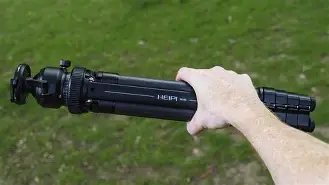
When I was looking for a new tripod, my criteria were non-negotiable: it had to weigh less than 3 pounds, it had to fit inside a standard carry-on without taking up half the space, and it had to be stiff enough to support my Sony a7R V with a 70-200mm f/2.8 lens. In my experience, most travel tripods suffer from "leg whip"—that annoying vibration that occurs when you extend the thinner bottom sections. What initially drew me to the Heipi W28S was its unconventional leg design. Instead of standard round tubes, it uses a slightly more complex geometry that allows the legs to nest more tightly against each other when collapsed.
Upon unboxing it, the first thing I noticed was the build quality. The carbon fiber has a distinct, high-quality weave that feels dense under the hand. There is a satisfying lack of play in the hinges. I was surprised by how tactile the locking mechanisms felt. Many brands use rubberized grips on their twist locks that eventually peel or get gummy in high humidity, but Heipi went with a textured finish that has held up remarkably well through rain and salt spray during my time on the coast.
Design Innovation: The Pillar-in-Pillar System
The standout feature, and the one I used most frequently over the last three months, is the "Pillar-in-Pillar" design. The center column isn't just a pole; it is actually a fully functional mini tripod stored inside the main legs. I found this incredibly useful for macro photography. On several occasions, I was shooting forest floor details in Olympic National Park where the full tripod was too cumbersome to get low enough. I simply unscrewed the bottom hook, pulled out the center pillar, and within seconds, I had a sturdy tabletop-style tripod that could sit inches from the ground.
One thing that bothered me initially was the friction when sliding the mini tripod back into the main body. If there is even a grain of sand on the inner pillar, it grinds. I learned the hard way that you need to keep this interface clean. After a particularly dusty shoot in the Oregon desert, I had to spend twenty minutes with a microfiber cloth and some canned air to get the action smooth again. It’s a brilliant design, but it demands more maintenance than a traditional single-mast tripod.
Field Performance: Stability and Vibration
Stability is where the rubber meets the road. I’ve tested the W28S in some truly sub-optimal conditions. During a night shoot in the city, I had the tripod fully extended on a bridge with heavy truck traffic passing by. In my experience, this is the ultimate test of dampening. What I found was that the W28S handles high-frequency vibrations better than my old Manfrotto BeFree. The carbon fiber seems to "eat" the vibration rather than echoing it up to the sensor.
However, once I fully extended the center column to its maximum height, I noticed a significant drop in stability. This is to be expected with any travel tripod, but because the center column is actually three separate legs collapsed together, there is a tiny amount of inherent mechanical "chatter" if the locking collar isn't cranked down with significant force. If you are shooting long exposures over 30 seconds, I strongly recommend keeping that center column down or at least partially retracted.
Find top-rated Cameras & Photography products at great prices.
Browse Now →The Ball Head Experience
The included ball head is another area where Heipi tried to innovate. It features a circular design that keeps the center of gravity very low. I noticed that the panning base is exceptionally smooth—almost hydraulic in feel. The click-stops for panoramic shooting are a nice touch, though for video work, I found them a bit intrusive. One specific disappointment I noticed was the knob for the quick-release plate. It’s a bit on the small side, making it difficult to operate while wearing heavy gloves. If you do a lot of winter photography, you might find yourself fumbling with it.
The 360-degree independent pan dial is a lifesaver for architectural shots. I spent a week in Tokyo shooting street corners and building facades, and being able to level the tripod and then pan perfectly horizontally without adjusting the ball is a feature I now realize I can't live without. The load capacity is rated high, and I can confirm it held my heavy 24-70mm lens at a 90-degree vertical tilt without any "creep" or sagging over time.
Pros and Cons After 3 Months of Use
- Pro: Extreme Portability. It fits in the side pocket of my Peak Design 30L backpack without the legs flaring out and hitting things as I walk.
- Pro: Modular Versatility. Having a mini tripod always on hand means one less piece of gear to remember to pack in my "extra" bag.
- Pro: Leg Angle Locks. The spring-loaded locks for the leg angles are snappy and haven't lost their tension after hundreds of cycles.
- Pro: Weight-to-Strength Ratio. It feels like a much heavier tripod when it is locked down, yet it doesn't weigh me down on 10-mile treks.
- Con: Maintenance Heavy. The nesting design is a magnet for grit. If you shoot in sandy or muddy environments, you will be cleaning it more often than a standard tripod.
- Con: Center Column Height. While the "pillar-in-pillar" is cool, it doesn't reach the same eye-level height as some competitors without sacrificing a lot of stiffness.
- Con: Small Interface Knobs. As mentioned, the ergonomics of the ball head knobs could be improved for those with larger hands or for use in cold weather.
Comparative Analysis: How It Shapes Up
To give you a better idea of where the Heipi sits in the current market, I've put together a comparison based on my testing alongside some of the other tripods I've owned or borrowed over the last year. This highlights the trade-offs between "standard" designs and Heipi’s "3-in-1" approach.
| Feature | Heipi W28S | Typical Carbon Travel Tripod | …
The Real-World Learning CurveOne thing I learned after the first month was how to properly utilize the spiked feet. Underneath the rubber caps are surprisingly sharp metal spikes. I used to ignore these, but when shooting on the mossy, slippery rocks of the Columbia River Gorge, the spikes were the only thing that kept my camera from sliding into the water. The rubber caps screw on quite securely, which I appreciated. I've used other tripods where the caps simply pull off and inevitably get lost in the mud. Heipi’s decision to make them screw-on is a small detail that shows they actually listen to outdoor photographers. Another "pro tip" I discovered: because the mini tripod inside is held by a friction collar, you can actually use it as a makeshift "riser" if you need just two more inches of height without deploying the legs of the sub-tripod. It’s not the intended use, but in a pinch, it works fine for stationary shots. Buying Guide: Is Total Versatility Right for You?Before you decide to replace your current setup with the W28S, you should ask yourself a few questions about your shooting style. I've found that this tripod appeals to specific types of creators, while others might find the 3-in-1 feature more annoying than useful. Looking for the best Cameras & Photography deals on Amazon? Shop Amazon →You should choose the Heipi W28S if: You are a weight-conscious traveler who frequently switches between landscape photography and low-angle macro or vlogging work. If you find yourself frequently using "ground pods" or carrying a separate GorillaPod, this will simplify your kit immensely. It’s also ideal for those who use mirrorless systems and mid-sized lenses like a 24-105mm or 16-35mm. You might want to look elsewhere if: You primarily shoot with massive 400mm+ prime lenses or work in extremely sandy/muddy environments every single day. The maintenance requirements for the nesting pillars can be a chore if you are constantly in the muck. Also, if you are 6'4" or taller, you may find the maximum height a bit stifling for comfortable eye-level shooting without hunching over. In my experience, the value proposition lies in the fact that you aren't just buying one tool. When I go to a wedding, I use the main legs for the ceremony, and I pull out the mini tripod to use as a remote camera mount on a table for the reception. That kind of flexibility is hard to put a price on. Final Thoughts After 90 DaysAfter three months of heavy use, the Heipi 3 In 1 Travel Tripod W28S has become my "daily driver." It is not a perfect piece of gear—no such thing exists—but it successfully solves the problem of compromise. I no longer have to choose between a sturdy tripod and a portable one. I no longer have to decide whether to bring my macro pod "just in case." I was surprised by how much I ended up using the sub-tripod independently. It’s great for sitting on a cafe table to review shots or for getting those impossible "worm's eye view" perspectives that make a landscape shot stand out. The durability hasn't been an issue yet; the carbon fiber shows very few scuffs despite being dragged across granite, and the locks remain as tight as day one. If you can commit to the occasional cleaning of the center pillar and you appreciate smart, compact geometry, this is likely the last travel tripod you will need to buy for a very long time. It has certainly earned a permanent spot in my camera bag. The W28S feels like a product designed by people who actually take photos. From the integrated hex wrench (hidden in the hook) to the way the legs snap into place, it feels intuitive. While the price point is a step up from entry-level aluminum options, the quality of life improvements it offers during a long trek or a busy travel day are, in my opinion, worth every penny. I've stopped searching for my "dream tripod" because, for now, I'm already using it. Explore Cameras & Photography Offers on AmazonCompare prices and discover the best deals available right now. Shop Now on Amazon →
We are a participant in the Amazon Services LLC Associates Program, an affiliate advertising program designed to provide a means for us to earn fees by linking to Amazon.ca and affiliated sites.
|
|---|