Is the Noble Fokus Amadeus Still Good in 2026? Long-Term Review
I've been using the Noble Fokus Amadeus for the better part of six months now, and I wanted to share a detailed, no-fluff look at whether this IEM still holds up in 2026. I bought it as a serious personal-listening upgrade — a unit I would carry daily, use for long listening sessions, and occasionally bring to casual monitoring situations. Over that time I put it through commute noise, focused home listening, and some light mixing checks. What follows is my honest experience: the things I loved, the annoyances I learned to live with, and who I think should consider buying one today.
Quick overview: what the Amadeus aims to be
In my experience, the Noble Fokus Amadeus positions itself as a refined, musical universal IEM that prioritizes a natural midrange and detailed treble without launching into clinical neutrality. Right away I noticed the design language — premium faceplates, solid-machined shells, and a removable cable — which telegraphs that Noble intended this to sit above entry-level audiophile gear. That promise mostly comes through in the listening experience: it’s a polished, engaging signature that favors listening enjoyment over absolute analytical flatness.
Build, fit, and daily use
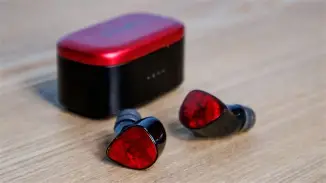
The first thing I noticed after unboxing was how solidly the Amadeus felt in my hands. The shells are machined and finished nicely; there were no molding lines or sharp edges that would irritate my ears. The supplied cable is flexible, with good strain relief at both ends, and the connectors feel snug and reliable. During my months of use I swapped cables a handful of times and never had intermittent contact or an unexpected disconnect.
Comfort-wise, these IEMs are on the smaller side compared to some customs and larger universals. I found them comfortable for multi-hour sessions, and the isolation is good enough for public transit without completely shutting out the world. One small irritation: the nozzle length is medium, so if you have particularly deep ear canals you may need to experiment with tips to get the best seal. I spent an afternoon trying foam and silicone tips and settled on a medium-spinfit-style tip that balanced comfort and bass response for my ears.
Sound: signature, detail, and tuning
After a few weeks of rotation and critical listening, the Amadeus settled into a character I can describe as “musically detailed with a warm-ish midrange and incisive but controlled treble.” Here’s what I heard across the main ranges:
Bass
I noticed that the bass has decent slam without being overbearing. It’s not a subwoofer-in-your-ear experience — it’s tighter and more focused. On electronic tracks that demand strong low-end presence, the Amadeus delivers punch and definition rather than sheer quantity. For orchestral and acoustic material, the low end supports the instruments without muddying them. If you want chest-thumping bass for EDM or hip-hop, you’ll likely prefer something more boosted, but for balanced listening and rhythm detail this was satisfying.
Mids
The midrange is where the Amadeus shines for me. Vocals sit forward but natural; there’s richness to male voices and a pleasant clarity to female vocals without shoutiness. I spent a lot of time listening to singer-songwriter albums and jazz, and in my experience the Amadeus pulls out emotional nuance — breath, texture, and small timing details — that make long listening sessions more engaging. Instruments like acoustic guitar and saxophone felt textured and present, which I appreciated when I wanted to focus on the music rather than analyze measurements.
Treble
The treble is detailed and extends well, but it is controlled. I heard good air and cymbal shimmer, and the sparkle never turned into harshness on recordings I know to be bright. However, there were a few high-energy tracks where I felt the top-end could have been a touch more airy; the Amadeus leans slightly toward refinement rather than absolute openness. After months of listening, I didn’t find the treble fatiguing — in fact, I often reached for the Amadeus for long sessions precisely because it’s forgiving while still offering detail.
Discover deals on Audio & Headphones — updated daily.
Shop Amazon →Soundstage and imaging
Soundstage on the Amadeus is respectable for a universal IEM: wider than average and a touch of depth, which helped orchestral recordings feel layered. Imaging is one of its strengths — instruments and voices are placed with clarity and separation. For mixing reference I wouldn’t rely on it exclusively, but for pinpointing elements and confirming stereo placement it performed well in my tests.
Resolution and dynamics
Resolution is very good: micro-details are present when the recording contains them, and dynamics feel natural. The Amadeus doesn’t chase the last bit of microscopic detail at any cost; instead, it trades a sliver of absolute resolution for a more coherent and musical presentation. That trade-off made it a joy for daily listening and work breaks where I wanted something engaging without the sterile clinical vibe of some studio monitors.
Real-world criticisms and annoyances
No product is perfect, and over months of use a few consistent niggles emerged for me:
- Tip sensitivity: Getting a consistently repeatable seal can be fiddly. I had days where sub-bass felt slightly recessed until I swappe…
Feature Noble Fokus Amadeus Typical Competitor (e.g., campfire-style flagship) Signature Musical, mid-forward, controlled treble Varies — often more analytical or brighter Bass Tight and defined, moderate quantity Often more boosted or deeper sub-bass depending on model Mids Warm, textured, vocal-forward Sometimes recessed or more clinical Treble Detailed but controlled Can be more airy or extended (sometimes at the cost of fatigue) Comfort Very comfortable for long sessions after tip experimentation Comfort varies widely by shell shape Accessories Sensible but not extravagant Some competitors include larger accessory bundles Who should buy the Noble Fokus Amadeus in 2026?
In my experience, the Amadeus is a strong choice if you fall into one of these categories:
- You prioritize musical enjoyment and vocal clarity over flat, clinical neutrality.
- You want an IEM that is comfortable for hours-long listening sessions and still reveals detail.
- You value build quality and a compact, travel-friendly universal that doesn't scream “budget.”
- You listen to a lot of acoustic, vocal-centric, or jazz and want an IEM that brings out texture and emotion.
Conversely, if you need an IEM for critical mastering where absolute neutrality and extreme top-end extension are mandatory, or you want the deepest sub-bass possible for bass-heavy genres, you might prefer alternatives tuned specifically for those use cases.
Buying guide: what to test and what to expect
If you’re considering the Amadeus, here are practical things I recommend you check before you buy or right after you receive yours. These are lessons I learned over months of real-world use.
1. Experiment with tips
I noticed the biggest sonic changes came from tip selection. Try a variety of silicone and foam tips, and pay particular attention to low-frequency extension when you switch. If the bass suddenly disappears on a track you know should have weight, reseat the earpiece and try a different tip size.
Find top-rated Audio & Headphones products at great prices.
See Deals →2. Burn-in and familiarity
Whether you believe in burn-in or not, give the Amadeus a few days of varied listening before making a final judgement. Some tracks that sounded slightly harsh initially settled into a more coherent balance after several dozen hours. More importantly, your ears acclimate — what seemed forward at first can become perfectly natural after a week.
3. Try the cable options
If possible, audition the IEM with different cables. The supplied cable is fine, but I found that switching to a lighter, zero-memory cable improved comfort for long commutes and reduced tangling. Cables also subtly change timbre; if you’re picky about the top-end, test a couple.
4. Use appropriate source gear
The Amadeus scales with a clean source. I used it with portable dongles, a mid-range DAP, and a dedicated DAC/amp at home. It sounded good across the board, but the best balance of clarity and depth came from a low-noise, neutral-sounding source. If you drive it straight from a noisy phone output, you’ll miss some subtleties.
5. Expect a musical balance, not clinical neutrality
If your primary goal is an exact flat response for pro mastering, be aware of the Amadeus's musical tilt. That isn’t a flaw — it’s a design choice — but it matters depending on how you’ll use the IEM.
Final thoughts
After six months of daily and serious listening, the Noble Fokus Amadeus remains one of the most satisfying universal IEMs I've owned for pure musical enjoyment. It excels with vocals and acoustic instruments, offers reliable build quality, and keeps fatigue at bay during long sessions. The fit and tip sensitivity require a small bit of attention, and the accessory bundle could be more generous given the asking price, but those are minor complaints against what’s otherwise a very thoughtful package.
In my experience, the Amadeus is still a relevant and compelling choice in 2026 — especially if you want an IEM that makes you want to listen. It’s not the last word in neutral measurement or deepest sub-bass, but for day-to-day listening where musicality and emotional engagement matter, it’s a standout. If you care as much about musical gratification as technical chops, the Amadeus is worth auditioning and, in my case, keeping in regular rotation.