Should You Buy the Wonder Oven Pro Toaster Oven in 2026? A Deep Dive
Electronics
Quick verdict (spoiler)
I've been using the Wonder Oven Pro for the last six months, and my short answer is: if you want a versatile countertop appliance that replaces a small oven, handles weeknight dinners and weekend baking reliably, and you value well‑thought‑out controls and a roomy interior, the Wonder Oven Pro is worth serious consideration. That said, it isn't perfect — there are a few quirks and trade‑offs I ran into that matter depending on your priorities, which I explain below.
Why I decided to buy it
I bought the Wonder Oven Pro early this year because my kitchen is small and I wanted a single appliance that could toast reliably, roast a small chicken, bake cookies, and handle occasional air‑frying without needing a separate countertop device. I had used compact toaster ovens for years and wanted something with better temperature stability, a true convection fan, and a user interface that didn't feel like a menu maze. After months of everyday use — toast every morning, baked goods on weekends, and roast nights twice a month — I feel comfortable sharing what it does well and where it falls short.
What the Wonder Oven Pro is (and what it isn't)
The Wonder Oven Pro is a mid‑to‑high range toaster oven with convection cooking and an integrated air‑fry feature. It feels like a compact countertop oven rather than a glorified toaster. The unit I used is roughly 18 inches wide and claims to fit a 12‑inch pizza and a 6‑pound chicken — in my experience those claims are accurate for most thin‑crust pizzas and average rotisserie‑style birds, though larger deep‑dish pizzas will need the full oven.
What it isn't: this is not a commercial oven, and it won't replace a full‑sized range for batch baking dozens of cookies. It's also not whisper‑quiet; the convection fan and the air‑fry mode add noticeable noise, though nothing intrusive during normal use.
My hands‑on experience: performance and day‑to‑day use
Here are the concrete things I tested and what I found.
Heating speed and preheat
Preheat is reasonably quick. The Wonder Oven Pro reached 400°F in about 7–8 minutes in my kitchen (small, around 68°F ambient) — noticeably faster than my old toaster oven and approaching the speed of the smaller built‑in ovens I've used. The control lets you preheat to precise temperatures with an audible chime when ready, which I appreciated for timing pizza nights.
Temperature accuracy and consistency
I verified temperature using a standalone oven thermometer placed near the center rack. The Wonder Oven Pro stayed within ~+/- 15°F of the set temperature across a 200–425°F range after a short stabilization period. In practice, cookies baked evenly and roasted vegetables browned consistently. For delicate recipes where +/- 5°F matters, I'd still recommend checking early and adjusting time, but for most home cooking it was solid.
Toasting and browning
Toasting is one of the unit's strengths. The element layout produces even browning on both sides of sliced bread when using the dedicated toast setting. I liked the multi‑level darkness presets, and manually adjusting time gave me a predictable result. Bagels and artisan breads needed a little extra time but finished with a nice crisp exterior and soft interior.
Convection and air‑fry modes
The convection mode is genuinely useful. It reduces bake times by roughly 10–20% compared to conventional bake in this model. I used it for roasting vegetables and small chicken breasts with consistently better browning compared to fan‑less modes.
Shop the latest Electronics picks on Amazon.
View Offers →The air‑fry tray produces a crisp finish on small batches — think fries, thinly sliced potatoes, and frozen snacks. It does not, however, replicate the deep crisp of a countertop dedicated air fryer's higher‑velocity air circulation on thick breaded items unless you accept slightly longer cook times. Still, for one‑pan weeknight meals where I wanted crispiness without extra oil, it was convenient.
Capacity and rack flexibility
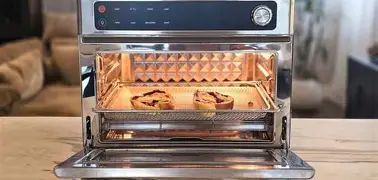
The interior has three rack positions and a sliding crumb tray. I could fit a 12‑inch pizza on the middle rack without the top element touching the crust. For roasting a 4–6 pound chicken, the middle lower position worked best; I had to use the included drip tray to catch juices, which made cleanup easier. If you frequently cook large sheet pan dinners for four or more, you might find the footprint limiting compared to a full oven.
Controls and user interface
The Wonder Oven Pro uses a combination of a small color display and a rotary encoder with tactile clicks. I liked the layout: presets for toast, bake, roast, air fry, pizza, and reheat are accessible, but you can also manually set time and temperature without digging through nested menus. There is optional Wi‑Fi connectivity and an app, but I rarely used the app after the initial firmware update because the local controls are fast and reliable.
Build quality and materials
Out of the box the unit feels sturdy. The door hinges are solid and the glass is thick. The interior finish is a matte enamel that resisted staining in my tests, and the included accessories (baking tray, air‑fry basket, wire rack) are well‑made. One disappointment: the handle gets warm to the touch when the oven is at high temperatures, so I make it a habit to use oven mitts even though the manual doesn't strictly require them.
Cleaning and maintenance
Cleanup is mostly easy. The crumb tray slides out and traps debris, and the interior enamel wipes down with a damp cloth after…Noise and energy use
Noise from the convection fan is audible but not disruptive — think low hum plus occasional higher‑pitched whir during fan speed changes. I measured the unit's rated wattage at 1500W on full blast; energy use is similar to other toaster‑ovens with convection and air‑fry functions. For my household, running it for 30–40 minutes several times a week added a modest amount to our electricity usage compared to using the full oven, but it's still more efficient for smaller meals.
What I appreciated most
- Even cooking: The convection fan has good airflow design; cookies, pizzas, and roasts came out consistently browned.
- Thoughtful presets: The presets are sensible and avoid the usual oversimplified “one‑button” approaches.
- Interior capacity relative to footprint: It handles a 12‑inch pizza and a 4–6 pound roast comfortably without dominating my counter.
- Accessory quality: The air‑fry basket and trays are solid and dishwasher friendly.
- Accurate enough for home recipes: Temperature stability is good for the price and form factor.
What bothered me
- Warm handle: The door handle warms up at high temps; I prefer cool‑touch handles on appliances I use often.
- Fan noise in air‑fry mode: It’s louder than when baking — not a deal‑breaker but noticeable if you sit in the kitchen while it runs.
- App features are thin: The Wi‑Fi app exists, but most useful functions are already on the unit. Remote start is limited and firmware updates can be slow through the app.
- No dedicated rotisserie: For the price point, I missed a rotisserie spit accessory for genuinely even poultry roasting.
Pros & Cons (short list)
Pros
- Reliable convection cooking with even browning
- Good capacity for a countertop oven (fits 12" pizza)
- Intuitive local controls and sensible presets
- Useful air‑fry function for small batches
- Quality accessories and easy cleanup
Cons
- Handle gets warm during high‑temp use
- App and Wi‑Fi integration feel tacked on and underutilized
- Not as quiet as some premium models during air‑fry
- No rotisserie accessory included
How the Wonder Oven Pro stacks up (comparison)
I compared the Wonder Oven Pro to two other units I've used previously: a well‑known higher‑end smart toaster oven and a budget air‑fryer/toaster hybrid. Below is a compact comparison based on my hands‑on use.
| Feature | Wonder Oven Pro (my unit) | Competing Smart Oven (higher-end) | Budget Air Fryer‑Toaster Hybrid |
|---|---|---|---|
| Interior capacity | Fits 12" pizza; 4–6 lb roast | Similar or slightly larger; better for sheet pans | Smaller; best for single baskets |
| Max temp | 450°F | 500°F | 400°F |
| Wattage | ~1500W | ~1800W | ~1400W |
| Convection | Yes — effective | Yes — very effective | Basic circulation |
| Air fry | Yes — good for small batches | Yes — stronger crisp | Yes — best value |
| Controls | Rotary + color display; easy | Touch + large display; customizable | Simple buttons; limited |
| Smart app | Present but basic | Robust with guided recipes | Not available |
| Price (typical) | Midrange | Premium | Budget |
| My overall rating | 8/10 — best balance of features/size | 9/10 — premium but pricier | 6.5/10 — great value, less capable |
Who should buy the Wonder Oven Pro?
In my experience, the Wonder Oven Pro is best for people who:
- Have limited kitchen space but want a unit that can do more than toast.
- Cook for one to three people often and like to make pizza, roast small poultry, and bake without using the full oven.
- Value reliable convection cooking and a straightforward control scheme over bloated app ecosystems.
It might be less suitable for:
- Large families that need full sheet pan capacity regularly.
- Home bakers who rely on perfect temperature precision for professional results.
- People who expect a fully featured smart app with guided recipes and complex scheduling.
Buying guide — what to check before you buy
When evaluating any toaster oven in 2026 — and specifically if you're considering the Wonder Oven Pro — here are the practical details I wish I'd double‑checked before purchase and that I used to decide whether it fit my kitchen and habits.
Looking for the best Electronics deals on Amazon?
Browse Now →1. Measure the space
Measure the counter area and overhead cabinets. The Wonder Oven Pro is compact but needs clearance on top and at the back for ventilation. I left at least 4 inches above and 2 inches behind and never had heat issues.
2. Think about the recipes you make
If you bake full trays of cookies or roast large turkeys, a toaster oven won't replace a full oven. I tested the Wonder Oven Pro with weekly cookies, small roasts, and frozen snacks — it's great for those tasks but not for Thanksgiving‑scale roasts.
3. Check rack and accessory compatibility
Look for included trays and whether accessories are dishwasher safe. The Wonder Oven Pro comes with a wire rack, drip tray, and air‑fry basket; all but the wire rack were dishwasher safe, which saved me time.
4. Consider noise tolerance
If you work in the same room where the oven runs, note that convection and air‑fry modes have audible fans. I found the noise acceptable but louder than passive ovens.
5. Evaluate smart features realistically
Smart connectivity is nice, but I found local controls more useful for everyday cooking. If remote scheduling and guided recipe integration are essential to you, check how robust the brand's app is — on Wonder Oven Pro it’s functional but limited in 2026.
6. Warranty and support
Check the warranty length and what it covers (elements, electronics, labor). I registered my unit and found customer support responsive for a minor firmware question. A two‑year limited warranty is typical for this class of appliance.
Final thoughts
After several months of real use, the Wonder Oven Pro has earned a permanent spot on my counter. It does what I bought it to do: reliably toast, bake, roast, and air‑fry modest portions without taking up the space or energy of a full oven. I especially appreciated the even convection results and the practical presets that save time on weeknights. The main compromises are a warm handle, a louder fan in air‑fry mode, and a smart app that feels more like a convenience than a necessity.
If you're balancing counter space, performance, and price, and you cook for one to three people, the Wonder Oven Pro hits a sweet spot. If you require professional‑grade precision, ultra‑quiet operation, or an extensive smart recipe ecosystem, you might prefer a higher‑end alternative. For my household's daily rhythms and cooking style, it has been a reliable, well‑designed workhorse that I reach for several times a week.