Starlight 12 Phantom Small Honest Review — Is the Hype Justified?
I still remember the adrenaline rush I felt when the Finalmouse drop went live. After months of scouring Twitter for leaks and countdowns, I managed to snag a Starlight 12 Phantom Small. There is a certain mystique surrounding Finalmouse that feels more like a Supreme drop than a hardware purchase, and honestly, that’s where the trouble starts for most people. I’ve been using this phantom-grey magnesium mouse as my primary driver for nearly six months now, putting it through hundreds of hours of competitive Valorant, Apex Legends, and daily productivity work. I wanted to wait until the "new toy" feeling wore off before writing this because I’ve seen too many reviews that were just honeymoon-phase hype. Now that the magnesium has been broken in and the scroll wheel has seen its fair share of use, I have some very specific thoughts on whether this 42-gram wonder is actually worth the secondary market prices or even the original MSRP.
The First Impression: Unboxing a Myth
When the package finally arrived at my door, my first thought was about how light the box felt. I genuinely questioned if there was even a mouse inside. Moving from a Logitech G Pro X Superlight—which is by no means a "heavy" mouse at 63 grams—to the Starlight 12 Small at roughly 42 grams was a jarring shift. I’ve been using ultra-light mice for years, but this felt different. It felt metallic and cold. The Phantom aesthetic is arguably one of Finalmouse’s best designs; the dark grey finish with the subtle "starlight" speckles looks sophisticated without being overly flashy. I was surprised by how much I liked the texture. It isn't smooth like plastic; there is a slight grain to the magnesium alloy that feels premium in the hand.
However, the first thing I noticed—and this is a common theme with Finalmouse—was that the quality control wasn't perfect right out of the gate. My scroll wheel was slightly off-center to the right. It didn't affect the scroll itself, but for a product that markets itself as the "pinnacle of gaming engineering," seeing a crooked wheel within five minutes of opening the box was a bit of a letdown. I’ve learned to live with it, but it’s those little details that start to peel back the layers of hype.
Daily Usage: The Weight and the Shape
In my experience, the shape of the Starlight 12 Small is its greatest asset and its biggest hurdle. I have medium-sized hands (about 18.5cm x 9.5cm), and I typically use a claw or fingertip grip. For fingertip users, this mouse is a dream. The low profile and the narrow waist allow for incredible micro-adjustments. I found that my tracking in Apex Legends improved almost immediately because there was so little inertia to overcome. Turning 180 degrees felt effortless. What I found was that the weight reduction isn't just a gimmick; it actually changes how you interact with the mousepad. I noticed that I stopped "tensing" my forearm during intense gunfights because I didn't need to exert as much force to move the mouse.
One thing that bothered me over time, though, was the size. After about three months of use, I started to notice some hand cramping during long sessions. The "Small" version is truly small. It’s significantly shorter and lower than most standard gaming mice. If I tried to shift into a more relaxed palm grip, my fingers would overhang the buttons, and my palm would have zero support. I eventually had to adjust my grip style entirely to accommodate the mouse, which is something a lot of people don’t mention. You don't just buy a Starlight 12; you adapt your hands to it. If you have large hands or if you prefer any sort of palm contact, I would warn you to stay far away from the Small variant.
The Magnesium Chassis: Real Performance or Marketing?
The "magnesium-honeycomb" design is the centerpiece of the Starlight 12 marketing. Finalmouse claims this allows for a stronger structure than plastic while being lighter. After testing for months, I can say it is incredibly rigid. I tried to apply "side-flex" by squeezing the walls, and there was zero creaking—something I couldn't say about the older plastic Ultralight 2. I was surprised by how much I appreciated the metallic feel. It doesn't get that "greasy" feeling that some ABS plastic mice get after a few hours of sweating. It stays cool to the touch.
But there’s a trade-off. Metal is harder to manufacture to tight tolerances than plastic. I noticed that the left and right mouse buttons had a tiny bit of side-play. It wasn't enough to mess up my clicks, but it gives the mouse a slightly "rattly" feel if you shake it. Also, because the bottom plate is also magnesium, I found that I had to be very careful with which mouse skates I used. The stock skates are mediocre at best. I eventually swapped them out for some aftermarket PTFE dots because the stock ones felt scratchy against my Artisan Hayate Otsu pad. Once I swapped the skates, the glide became buttery smooth, but it's another example of having to "fix" a premium product.
The Technical Performance: Wireless and Sensors
I’ve been using the Phantom on a 1000Hz polling rate, and I haven't experienced a single dropout or latency issue. Finalmouse uses a proprietary wireless technology that they claim is faster than wired, and while I can't scientifically measure that, it feels indistinguishable from the Razer or Logitech implementations. I was worried about the battery life because of how small the internal battery must be to keep the weight down. In my experience, I’ve been getting about 3 to 4 weeks of use on a single charge with about 4 hours of gaming a day. That’s actually quite impressive. What I found was that the mouse charges very quickly—usually under an hour from 0% to "good to go."
Shop the latest Electronics picks on Amazon.
Browse Now →One disappointment a real owner would notice is the micro-USB charging port. In 2026, it is almost offensive to see a micro-USB port on a high-end electronic device. It feels fragile, and I’m always worried I’m going to bend a pin when I’m plugging it in at night. If this had USB-C, it would feel much more like a modern tool rather than a relic of 2018. It’s a small gripe, but when you’re paying a premium, you expect modern standards.
The Clicks and the Scroll Wheel
The clicks on the Starlight 12 Phantom use Kailh 8.0 switches. I’ve used these switches in other mice, and they are generally snappy and tactile. In the Starlight chassis, they feel very mechanical and loud. I personally like the "crispness," but they are quite heavy. If you are someone who likes a very light "feather" click (like on the older Logitech G403), these might feel too stiff for you. I found that I had to "break them in" for a week before they felt consistent.
The scroll wheel is where most of my frustration lies. Aside from being off-center, the scrolling steps aren't very defined. When I’m trying to jump in-game usi…
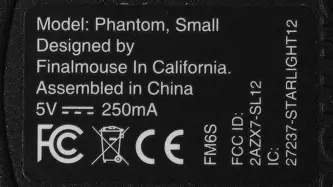
Detailed Comparison to Market Leaders
To help visualize where the Starlight 12 fits into the current landscape, I've put together this comparison based on my testing against the other "big" wireless contenders. This isn't just based on spec sheets; this is how they actually feel on the desk.
| Feature | Starlight 12 Phantom Small | Logitech G Pro X Superlight 2 | Razer Viper V3 Pro |
|---|---|---|---|
| Weight | ~42g | ~60g | ~54g |
| Chassis Material | Magnesium Alloy | ABS Plastic | Recycled Plastic |
| Charging Port | Micro-USB | USB-C | USB-C |
| Max Polling Rate | 1000Hz (Stable) | 4000Hz | 8000Hz |
| Shape Profile | Low, Narrow, Small | Medium, Safe, Ambi | Low, Medium-Long |
| Durability Feel | Rigid but "Metallic" | Solid, Workhorse | Lightweight, Flexible |
Pros and Cons: The Honest Truth
After using this mouse for several months, I can boil it down to a few key points. It isn't a perfect product, but for the right person, it might be the only mouse they ever want to use.
- Pros:
- The weight is genuinely game-changing for competitive shooters where micro-adjustments are key.
- The magnesium chassis is incredibly rigid and doesn't suffer from the creaking found in many ultra-light plastic mice.
- Excellent wireless implementation with zero lag or interference in my experience.
- The aesthetic is beautiful and doesn't look like a typical "gamer" peripheral.
- Amazing for fingertip grip users due to the small size and low sensor latency.
- Cons:
- The price is exorbitant, especially considering the frequent quality control issues like off-center scroll wheels.
- Micro-USB charging is outdated and inconvenient.
- The shape is very polarizing; it’s too small for many hand sizes and grip styles.
- Stock mouse skates are scratchy and almost require an aftermarket upgrade.
- Availability is artificial, forcing many to deal with scalpers on the secondary market.
A Real Buyer’s Guide: Should You Hunt One Down?
Before you go out and spend your hard-earned money on a Starlight 12 Phantom, there are a few things I think you need to consider. My experience has taught me that this mouse is a specialist tool, not a general-purpose gaming mouse.
1. Measure Your Hands and Know Your Grip
In my experience, if your hands are longer than 19cm, the Small version will likely be unusable for anything other than a pure fingertip grip. I was surprised by how much the lack of palm support affected my comfort after a few hours. If you palm grip your mouse, do not buy the Small. Look for the Medium or an entirely different mouse like the DeathAdder V3 Pro. This mouse is designed for people who want the mouse to "disappear" in their hand, not for people who want to feel the mouse against their palm.
Looking for the best Electronics deals on Amazon?
See Deals →2. Be Ready to "Mod" Your "Pinnacle" Mouse
It’s a bit of a running joke in the community, but it’s true: to get the best out of a Starlight 12, you often have to finish the job for them. I found that I had to swap the skates and apply a tiny bit of "tape modding" to the side buttons to reduce the pre-travel. If you’re the type of person who just wants to take a mouse out of the box and never think about it again, the Starlight 12 might frustrate you. If you enjoy tinkering with your hardware, however, this is a great platform.
3. Consider the Software (Or Lack Thereof)
One thing I appreciated was the lack of bloated software. The Starlight 12 doesn't have a dedicated driver package that you need to keep running in the background. You change the DPI via a button on the bottom, and that’s it. For me, this is a huge plus. I hate having four different peripheral apps taking up RAM. But if you are someone who needs complex macros or specific RGB lighting profiles (of which there are none here), you’ll found the Phantom very limiting.
The Verdict: Is the Hype Justified?
So, is the hype justified? My honest answer is: Yes, but with a massive asterisk. From a pure performance standpoint, I haven't found a mouse that makes me feel more "connected" to the game than the Starlight 12 Phantom Small. The weight and the rigidity of the magnesium frame create a sensation of speed that is hard to replicate with plastic. When I’m in a high-stakes match, I genuinely feel like I have an advantage because the mouse responds to every tiny twitch of my fingers without hesitation.
However, from a consumer standpoint, the "prestige" of the brand doesn't always match the reality of the product. I shouldn't have to deal with a crooked scroll wheel on a mouse that costs this much. I shouldn't have to use a micro-USB cable in 2026. The hype is built on the fact that Finalmouse makes something different and limited, which creates a "FOMO" (Fear Of Missing Out) culture. If you can get this mouse at MSRP and you are a competitive FPS player with a fingertip grip, it is probably the best mouse you will ever own. But if you’re looking at paying double on the secondary market, I honestly don't think any piece of technology is worth that, especially when competitors are catching up in weight while offering better quality control and modern features.
In my experience, the Starlight 12 Phantom is a flawed masterpiece. It's a mouse that pushes the boundaries of what is possible with materials and weight, but it trips over its own feet when it comes to the basics of manufacturing consistency. I’m going to keep using mine because, despite the crooked wheel and the hand cramps, the 42-gram magnesium glide is addictive. But I’ll always have that nagging feeling that for this price, I shouldn't have had to compromise on anything.